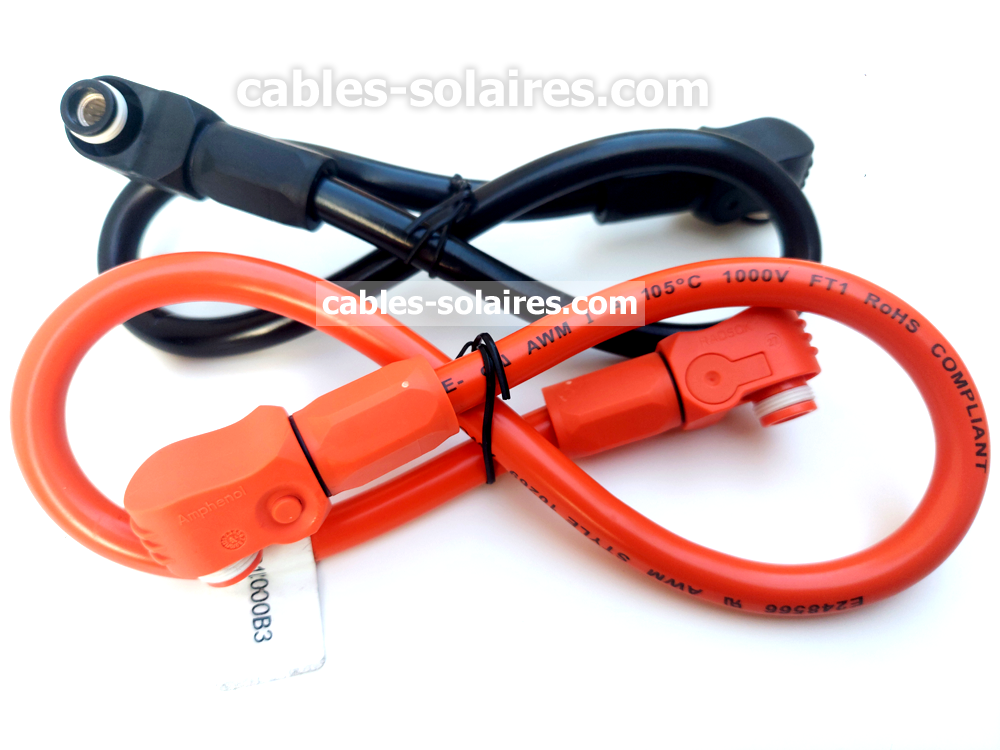
Sunsynk IP65 batteries stand out for their exceptional modular expansion capacity and IP65 certification designed for outdoor use. But to fully exploit this potential, the choice of connecting cables is decisive: cross-section, connectors, sealing, and length must all suit your installation. This guide reviews the available Sunsynk IP65 cables and how to choose the right configuration.
📋 Full contents:
Why IP65 certification changes everything
An outdoor battery installation, or one in a non-climate-controlled room, imposes constraints that standard cables don't always withstand: humidity, dust, significant temperature swings. The Sunsynk IP65 range is designed for these environments, and the cables that go with it must meet the same level of requirement.
📊 Key figures for the range:
- 25 mm² tinned copper cross-section across the entire range
- 100A continuous, up to 200A peak over 30 seconds
- Resistance < 0.5 mΩ for minimal energy loss
- -40°C to +85°C supported temperature range
- Up to 32 modules connectable in parallel
Modular expansion: up to 170 kWh
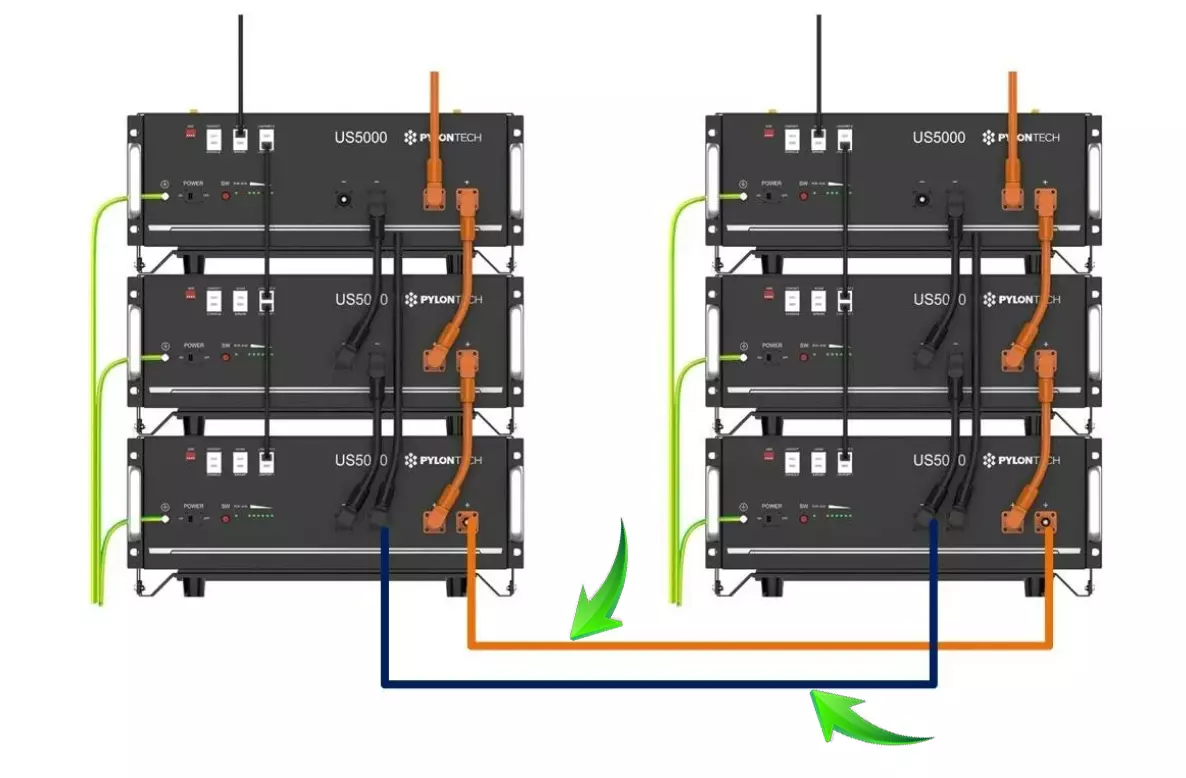
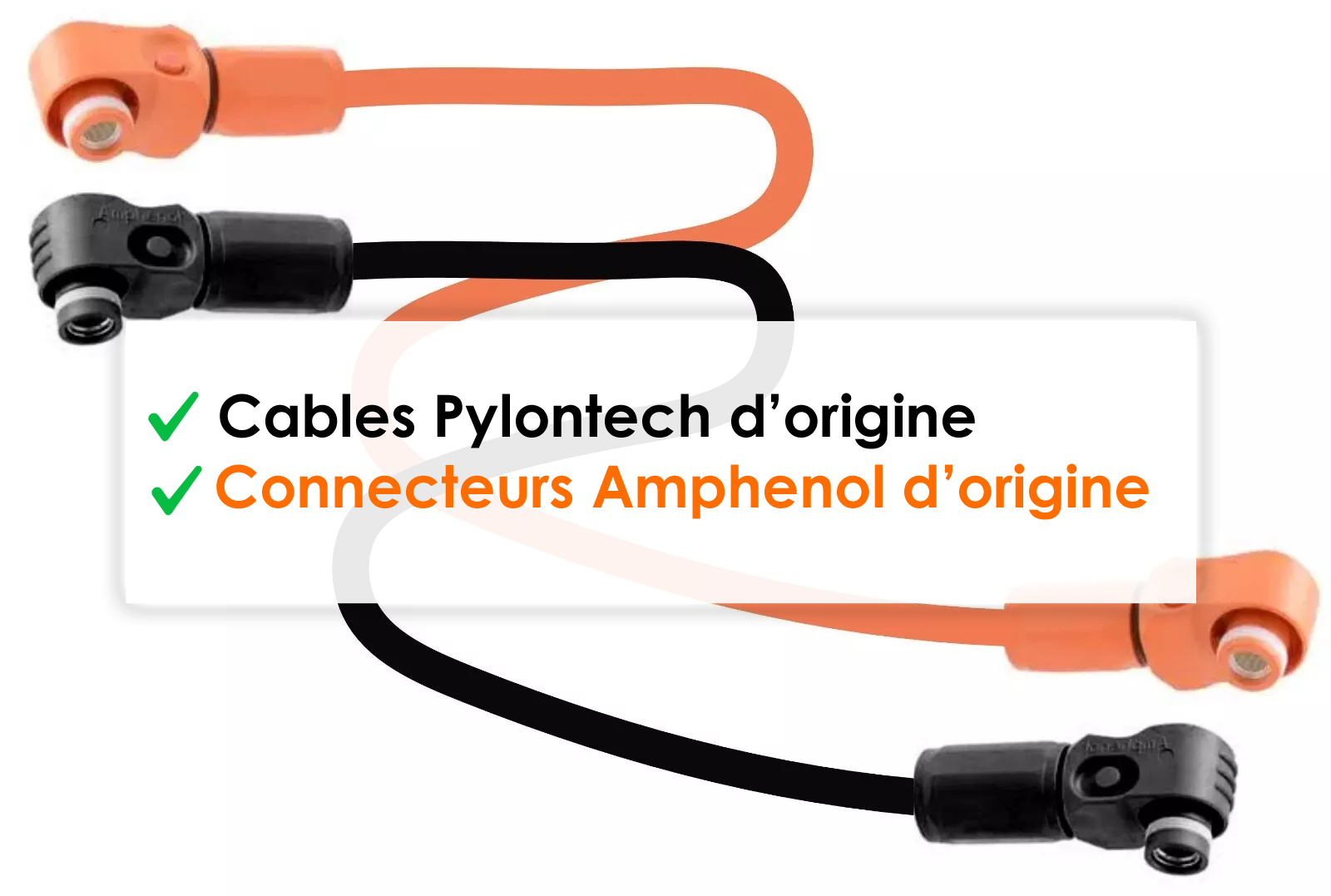
The principle of the Sunsynk L5.1 (5.12 kWh) and L5.3 (5.32 kWh) batteries is to start small and grow the installation as needs evolve, up to 32 modules in parallel for a cumulative storage of 170 kWh. This scalability only works if the connecting cables used at each stage keep the same cross-section and the same connector quality (Amphenol C10-730186-100/200) - mixing cables from different ranges is the leading cause of charge imbalance between modules.
50 cm, 70 cm, or 2 meters: which length to choose?
Three lengths cover most use cases:
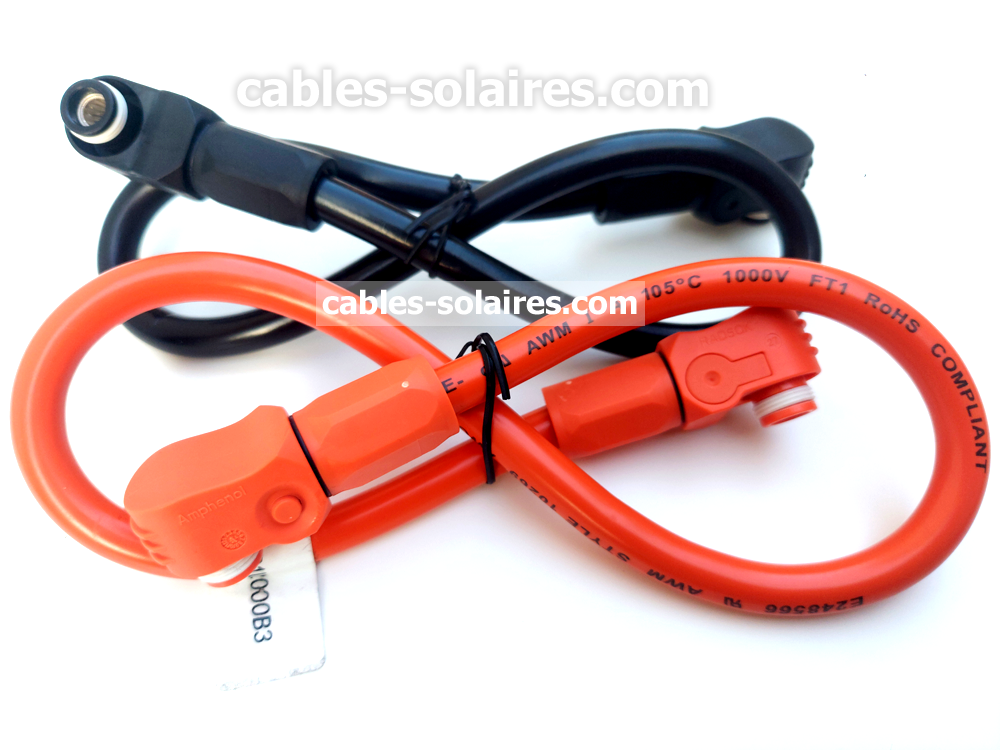
- 50 cm: the Medium Cable Set - designed for compact racks where modules are stacked side by side, modular expansion up to 170 kWh
- 70 cm: the Performance Cable Set - a compromise for installations with slightly more spacing between batteries, without sacrificing electrical resistance
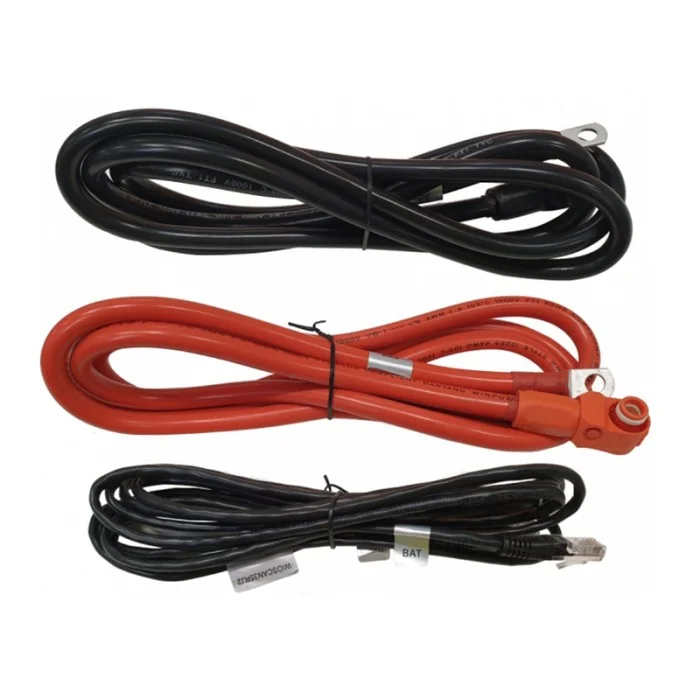
- 2 meters: designed for commercial and outdoor installations, with reinforced 1500V DC insulation, 20-year UV resistance, and IP65, CE, UL, and marine (DNV-GL) certifications
Simple rule: pick the shortest length that physically matches the actual spacing between your modules. A cable that's too long and hangs loose or loops around unnecessarily increases resistance and the risk of mechanical wear.
Inverter and battery compatibility
Sunsynk IP65 cables aren't limited to batteries of the same brand. Thanks to standard Amphenol connectors, they're cross-compatible with Pylontech US2000/US3000/US5000, BYD Battery-Box LV, Goodwe Lynx Home, and the GTX 2500/5000 range. On the inverter side, compatibility covers Sunsynk, Victron, Goodwe, Solis, SMA, and Growatt via CAN/RS485 protocols - a point still worth checking with your inverter manufacturer before purchase, as protocols evolve from one generation to the next.
Points to watch during installation
- Check that the cross-section (25 mm²) actually matches the current genuinely drawn by your configuration, especially beyond 15-20 modules in parallel
- For outdoor use, systematically favor the 2-meter version certified IP65/marine, even if the actual distance is shorter: the certification also covers connector resistance, not just length
- Don't reuse old, non-IP65-certified cables on an outdoor installation, even if the cross-section seems to match: connector sealing can't be judged visually
- Keep the same cable model across the entire chain of modules to avoid resistance differences between branches
Conclusion
The Sunsynk IP65 cable range is designed to support an installation that grows over time, indoors as well as outdoors. The right choice isn't just about length: cross-section, IP65 certification, and connector compatibility must remain consistent across the entire battery fleet to preserve the installation's performance and safety.