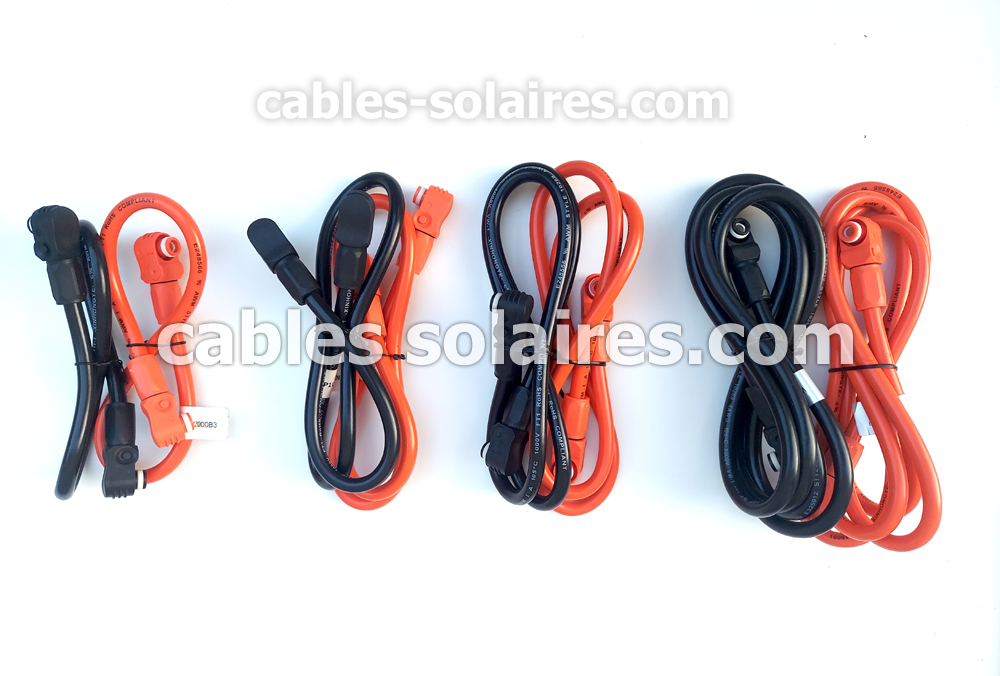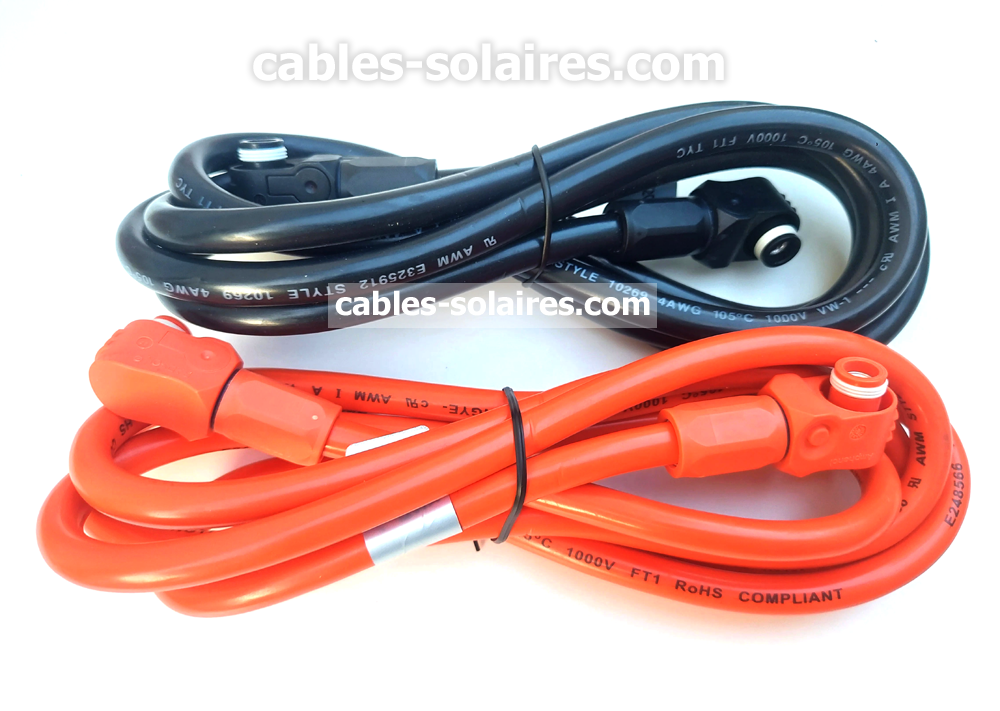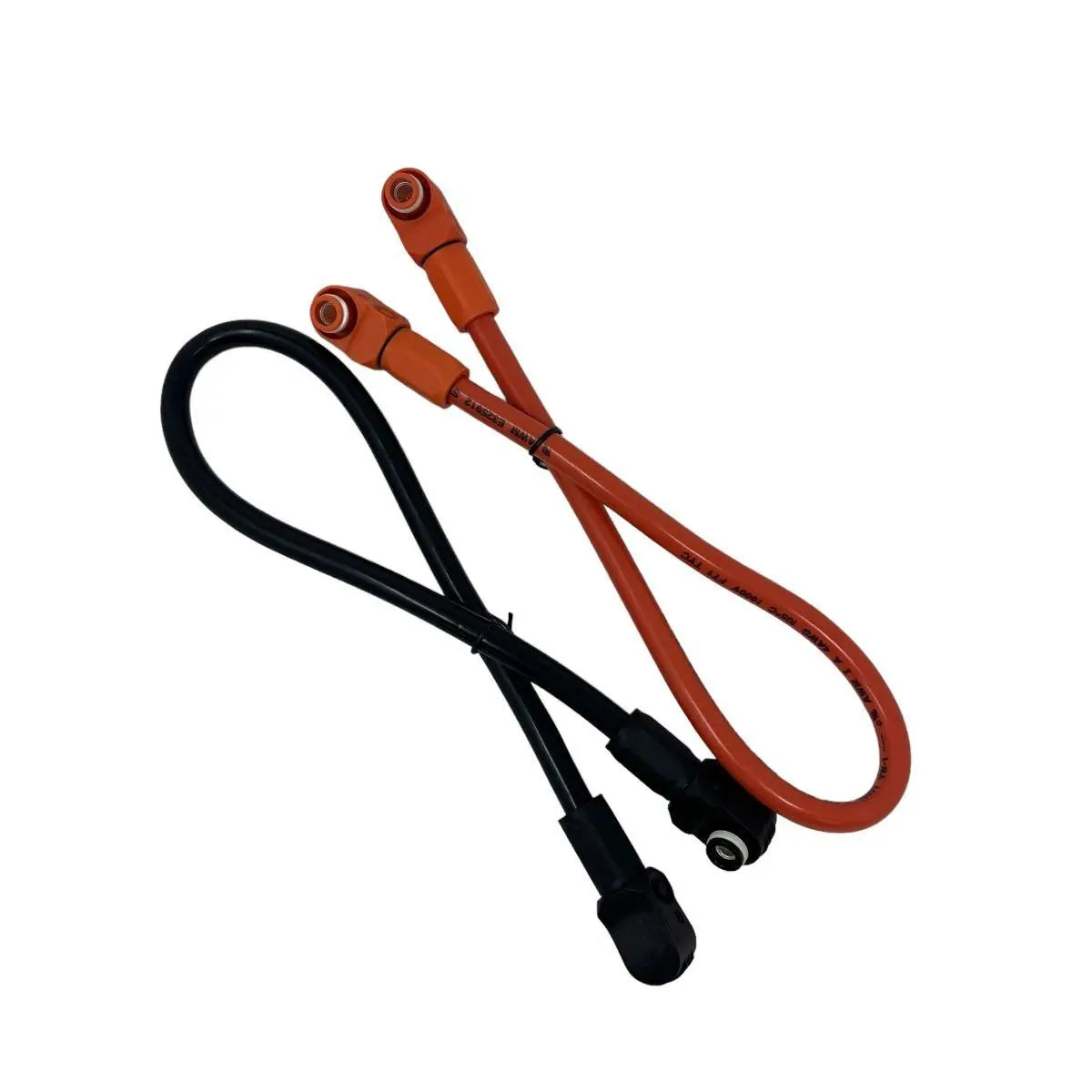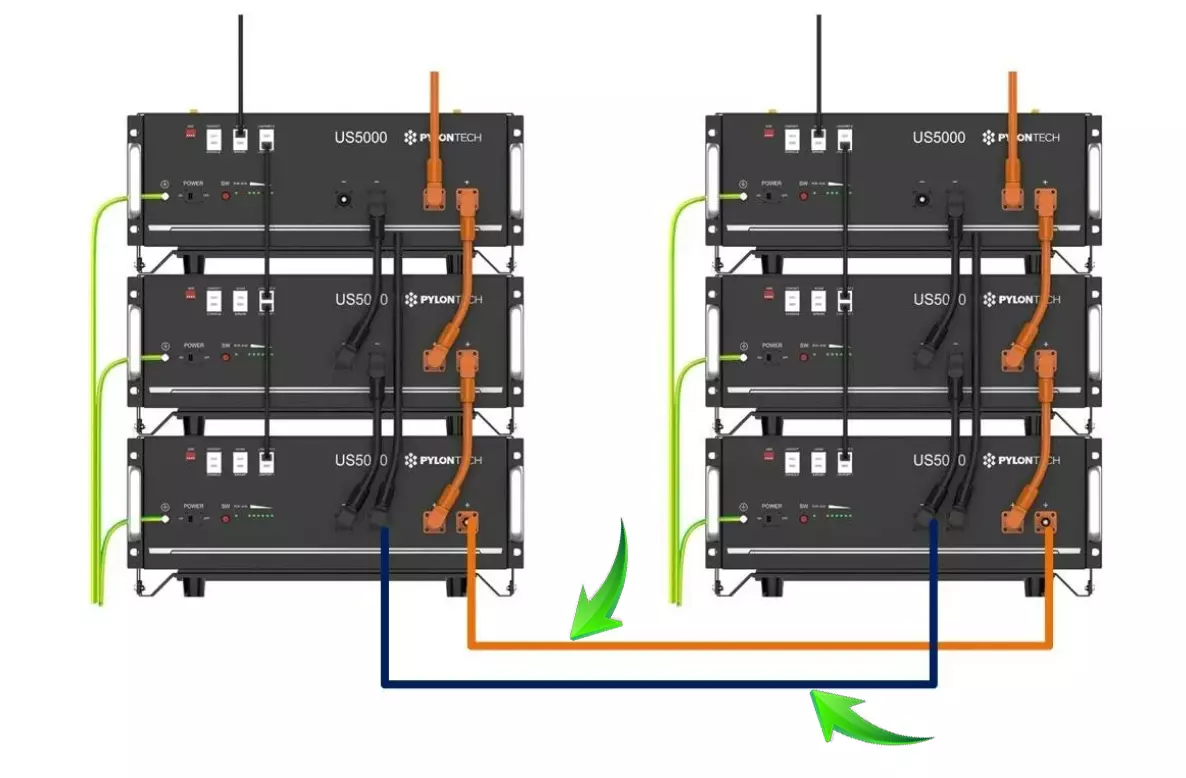
An undersized cable cross-section is the most common cause of overheating and voltage drop on a parallel battery installation. Here are the benchmarks to know before choosing.
Why cable cross-section matters
The higher the current flowing, the larger the copper cross-section needed to carry it without excessive heating or significant voltage drop. On a battery-to-battery link, current can be occasionally high (charge/discharge peaks), which makes cable sizing just as important as connector choice.
Sizing benchmarks
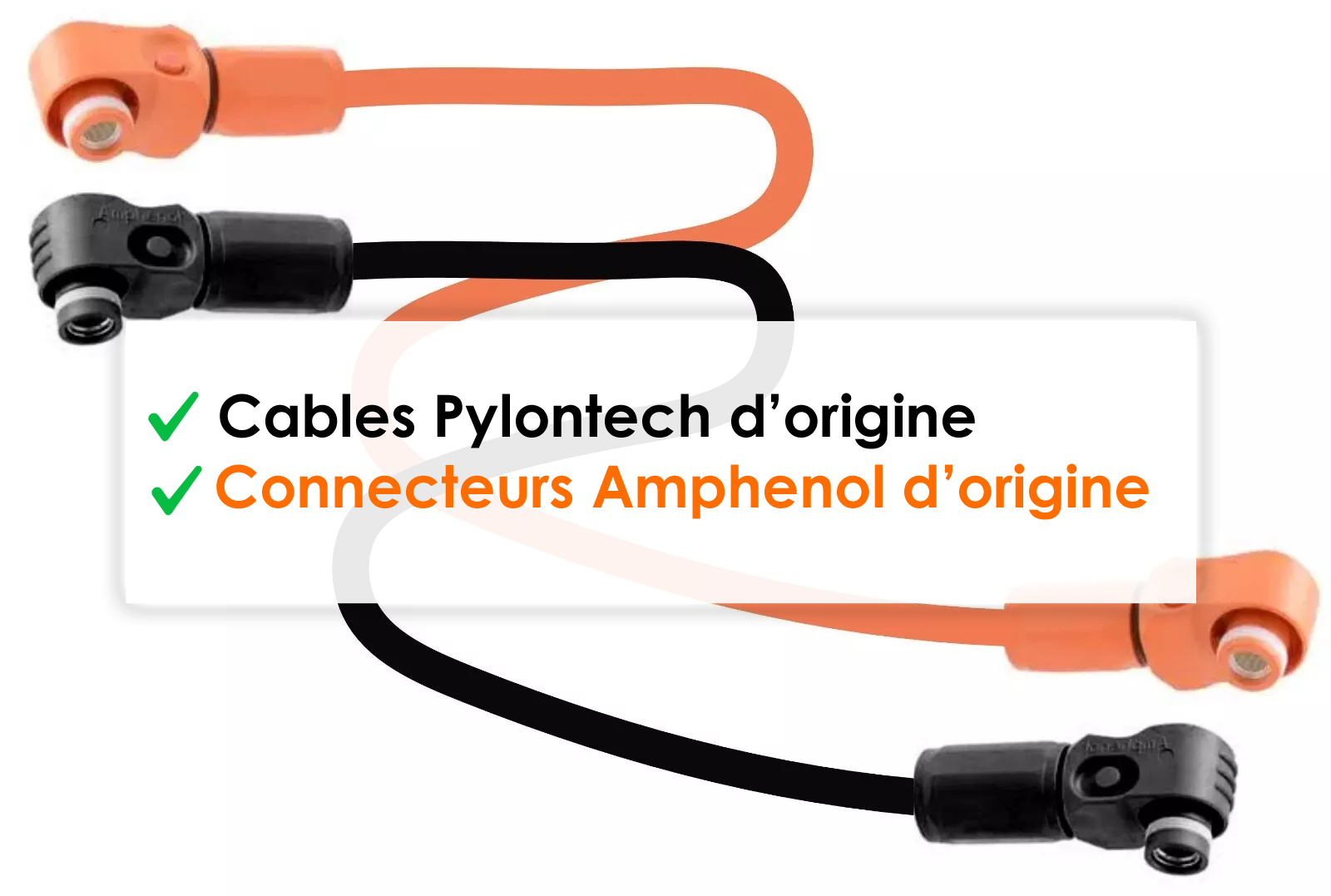
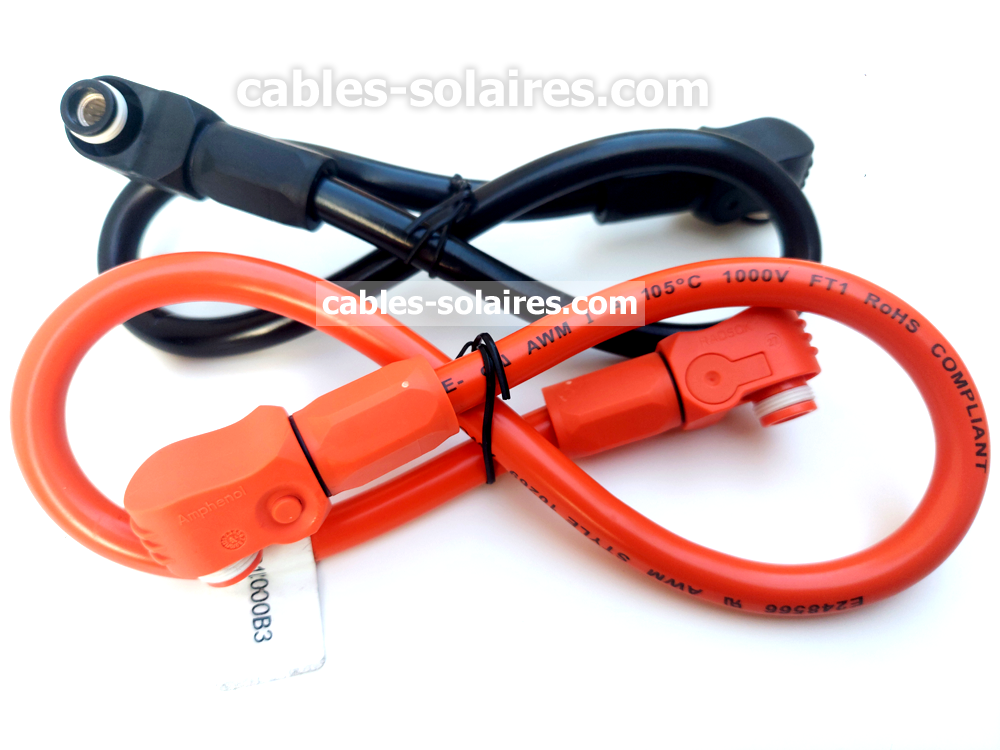
- 25mm² (roughly AWG 3-4): the standard cross-section used on our parallel cables for most residential lithium battery installations, in class 6 (extra-flexible) tinned copper to make routing easier in tight spaces.
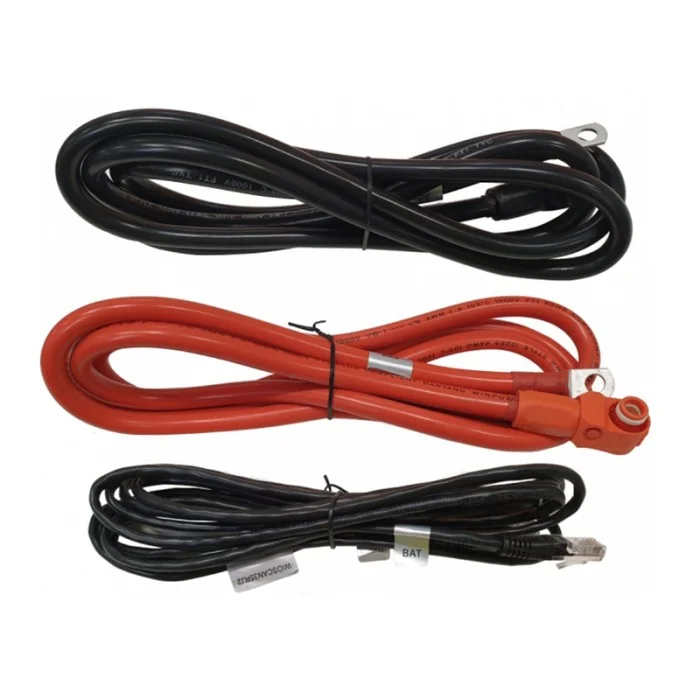
- Communication cables (RJ45): different logic - these cables carry a data signal, not power, so their sizing responds to shielding and contact quality criteria rather than cross-section.
- High-power installations or many modules in parallel: in this case, it's best to check the battery manufacturer's recommendation for maximum allowable current, rather than relying on a general rule.
If in doubt about the sizing suited to your installation (number of modules, maximum current), contact our customer service before ordering, or use our custom cable configurator.
Length and cross-section: a trade-off
For a given copper cross-section, the longer the cable, the greater the voltage drop. For installations where batteries are far apart (motorhome, boat, separate technical room), it's better to check the length actually needed rather than systematically choosing "longer just in case": measure the distance between connection points and add about 20% margin for routing bends.